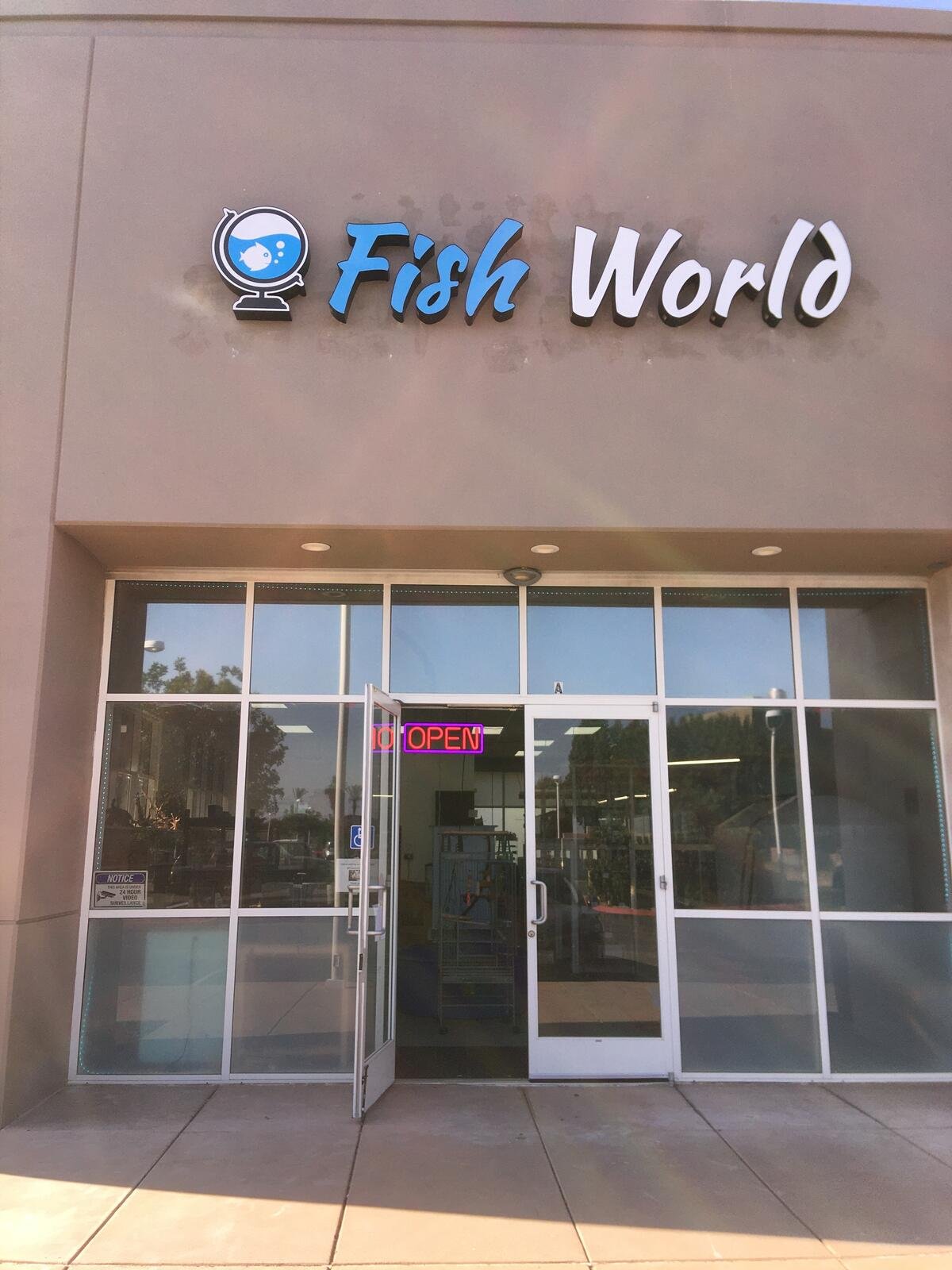
On Saturday February 25, Fish World in Ontario hosted the Southern CA Killifish Club’s monthly meeting. The club typically meets at members’ homes, and having the meeting at a local fish store brought strong turnout and new people to the club. I was happily surprised to meet new fish keepers who I did not recognize from the other large clubs in Southern California such as COAST and SCAPE.
The next meeting will be hosted by SCKC member Ray Van Veen, on Saturday March 25 at 6PM. If you are not on the club mailing list, please leave SCKC your contact information, or contact Ray at RayVV@aol.com for an invitation.
The club will skip its regular meeting in April so members can attend the Southwest Aquarium Keepers Event (SAKE) on April 22, 2023. SAKE is a large all-day freshwater fishkeeping convention near Phoenix, AZ. Attendance is free and there will be lectures, multiple auctions, and a raffle. Email azkillie@yahoo.com with the information below to register for SAKE:
1. Your name 2. Any current aquarium club affiliation(s) 3. Current hometown (and state)
I am very thankful to Fish World in Ontario for hosting SCKC, and I look forward to working with Chris, the owner, to host future events for the aquarium community.
If you are looking for local fish clubs and aquarium societies in Southern California please check out the meetings and events happening in March 2023.
COAST Fish Club Mar. 5th @ 12:00 PM Fountain Valley Senior Center 17967 Bushard St Fountain Valley, CA 92708 https://coastfishclub.com/
San Diego Tropical Fish Society Mar. 12th @ 6:00 PM Balboa Park, San Diego Casa de Prado Room 101 https://sdtfs.org/
San Diego Killifish and Livebearer Group Mar. 19th @ 10:30 AM Boll Weevil at Lakeside, CA 9741 Winter Gardens Blvd Lakeside, CA 92040 https://sdkal.club/
Southern CA Aquatic Plants Enthusiasts (SCAPE) Mar. 25th @ 12:30 PM St. Gregory’s Episcopal Church 6201 E. Willow St Long Beach, CA 90815 https://scapeclub.org/
On Saturday February 25, Fish World in Ontario hosted the Southern CA Killifish Club’s monthly meeting. The club typically meets at members’ homes, and having the meeting at a local fish store brought strong turnout and new people to the club. I was happily surprised to meet new fish keepers who I did not recognize from the other large clubs in Southern California such as COAST and SCAPE.
The next meeting will be hosted by SCKC member Ray Van Veen, on Saturday March 25 at 6PM. If you are not on the club mailing list, please leave SCKC your contact information, or contact Ray at RayVV@aol.com for an invitation.
The club will skip its regular meeting in April so members can attend the Southwest Aquarium Keepers Event (SAKE) on April 22, 2023. SAKE is a large all-day freshwater fishkeeping convention near Phoenix, AZ. Attendance is free and there will be lectures, multiple auctions, and a raffle. Email azkillie@yahoo.com with the information below to register for SAKE:
1. Your name 2. Any current aquarium club affiliation(s) 3. Current hometown (and state)
I am very thankful to Fish World in Ontario for hosting SCKC, and I look forward to working with Chris, the owner, to host future events for the aquarium community.
If you are looking for local fish clubs and aquarium societies in Southern California please check out the meetings and events happening in March 2023.
COAST Fish Club Mar. 5th @ 12:00 PM Fountain Valley Senior Center 17967 Bushard St Fountain Valley, CA 92708 https://coastfishclub.com/
San Diego Tropical Fish Society Mar. 12th @ 6:00 PM Balboa Park, San Diego Casa de Prado Room 101 https://sdtfs.org/
San Diego Killifish and Livebearer Group Mar. 19th @ 10:30 AM Boll Weevil at Lakeside, CA 9741 Winter Gardens Blvd Lakeside, CA 92040 https://sdkal.club/
Southern CA Aquatic Plants Enthusiasts (SCAPE) Mar. 25th @ 12:30 PM St. Gregory’s Episcopal Church 6201 E. Willow St Long Beach, CA 90815 https://scapeclub.org/
On Saturday February 25, Fish World in Ontario hosted the Southern CA Killifish Club’s monthly meeting. The club typically meets at members’ homes, and having the meeting at a local fish store brought strong turnout and new people to the club. I was happily surprised to meet new fish keepers who I did not recognize from the other large clubs in Southern California such as COAST and SCAPE.
The next meeting will be hosted by SCKC member Ray Van Veen, on Saturday March 25 at 6PM. If you are not on the club mailing list, please leave SCKC your contact information, or contact Ray at RayVV@aol.com for an invitation.
The club will skip its regular meeting in April so members can attend the Southwest Aquarium Keepers Event (SAKE) on April 22, 2023. SAKE is a large all-day freshwater fishkeeping convention near Phoenix, AZ. Attendance is free and there will be lectures, multiple auctions, and a raffle. Email azkillie@yahoo.com with the information below to register for SAKE:
1. Your name 2. Any current aquarium club affiliation(s) 3. Current hometown (and state)
I am very thankful to Fish World in Ontario for hosting SCKC, and I look forward to working with Chris, the owner, to host future events for the aquarium community.
If you are looking for local fish clubs and aquarium societies in Southern California please check out the meetings and events happening in March 2023.
COAST Fish Club Mar. 5th @ 12:00 PM Fountain Valley Senior Center 17967 Bushard St Fountain Valley, CA 92708 https://coastfishclub.com/
San Diego Tropical Fish Society Mar. 12th @ 6:00 PM Balboa Park, San Diego Casa de Prado Room 101 https://sdtfs.org/
San Diego Killifish and Livebearer Group Mar. 19th @ 10:30 AM Boll Weevil at Lakeside, CA 9741 Winter Gardens Blvd Lakeside, CA 92040 https://sdkal.club/
Southern CA Aquatic Plants Enthusiasts (SCAPE) Mar. 25th @ 12:30 PM St. Gregory’s Episcopal Church 6201 E. Willow St Long Beach, CA 90815 https://scapeclub.org/
Daphnia and moina are a great live food for killifish and other tropical fish. Their jerky movement through water is appealing to picky eaters, they stay in the water column until eaten, and can be used as “vacation feeders” without fouling the water.
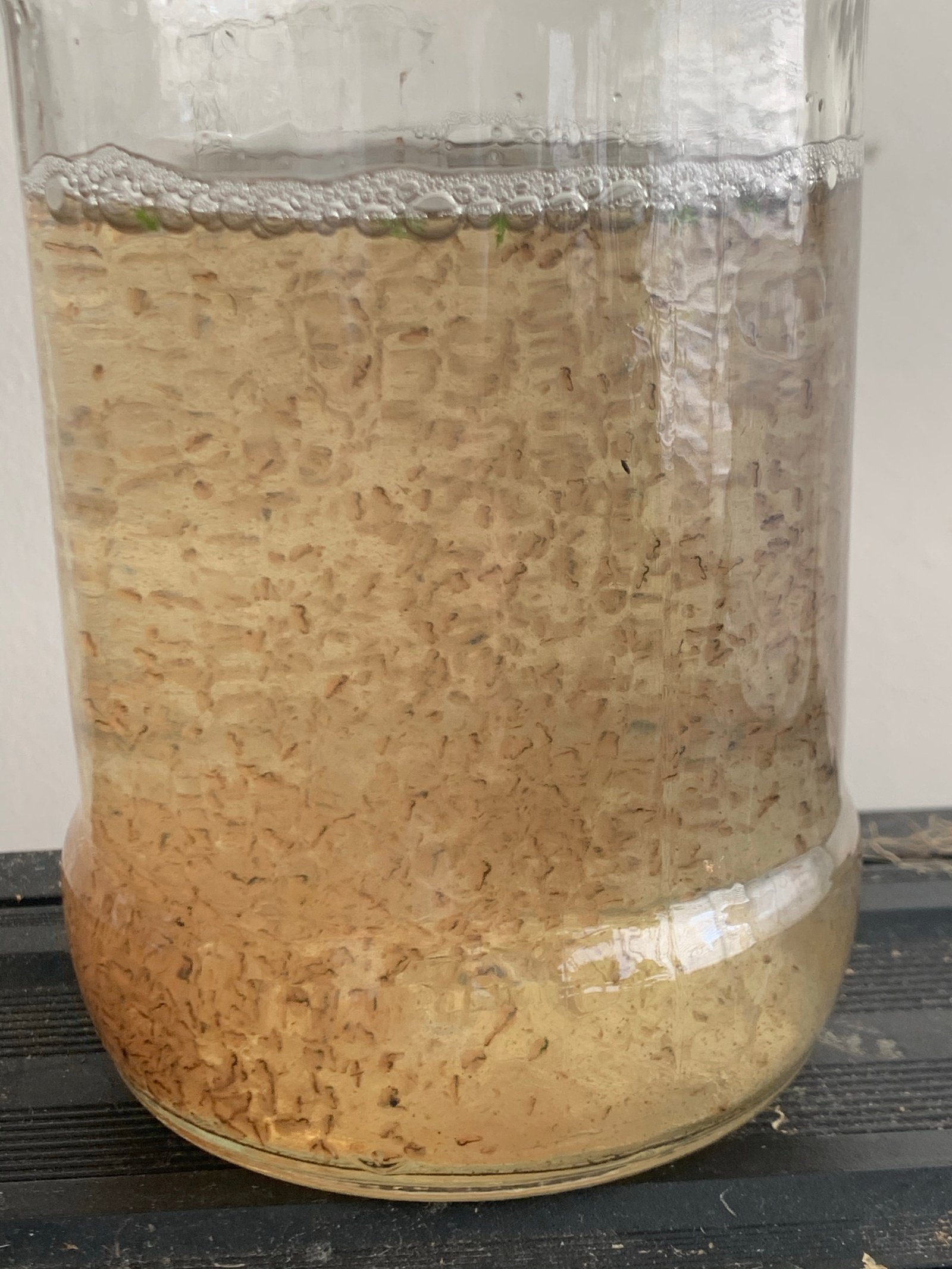
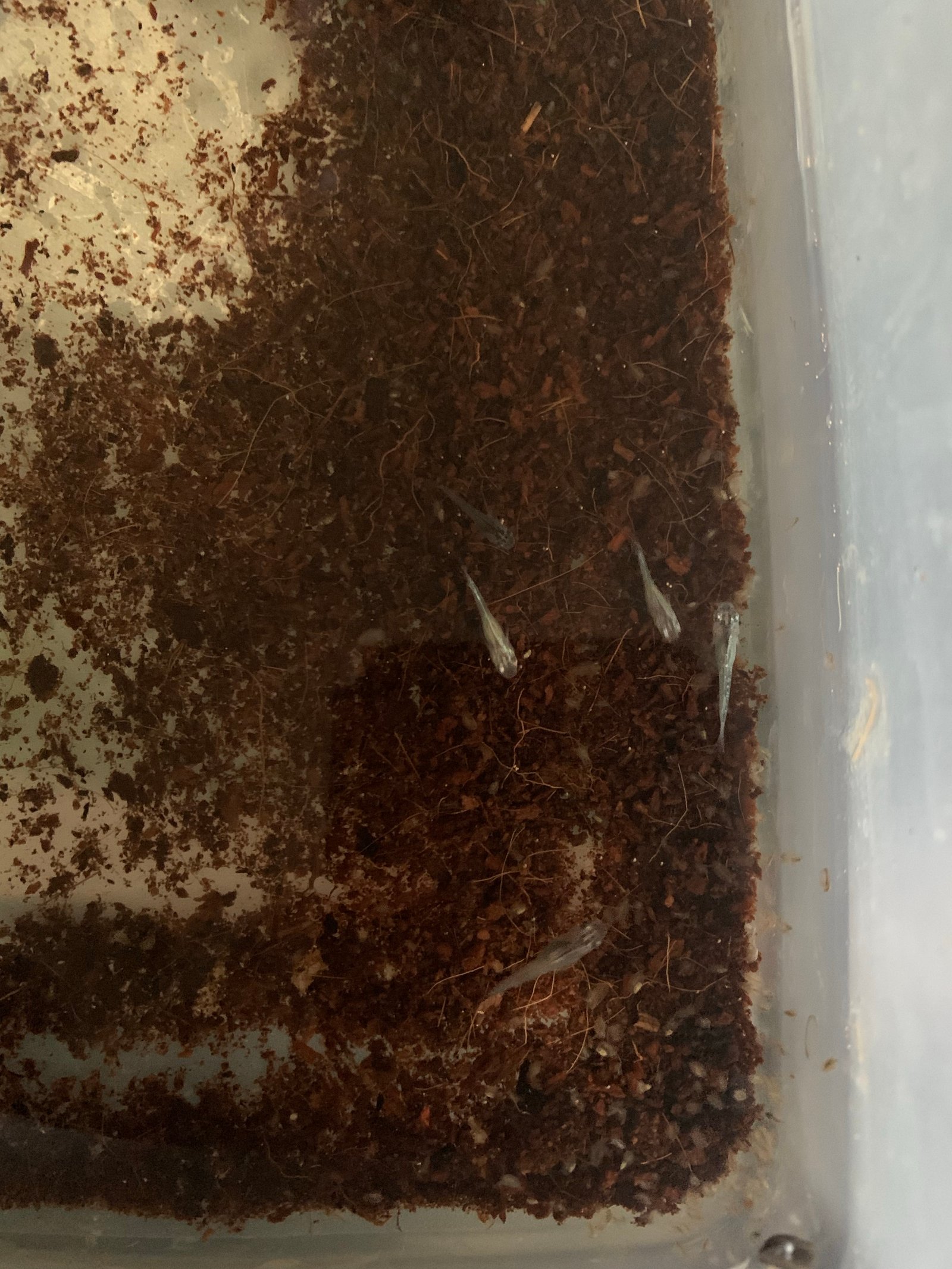
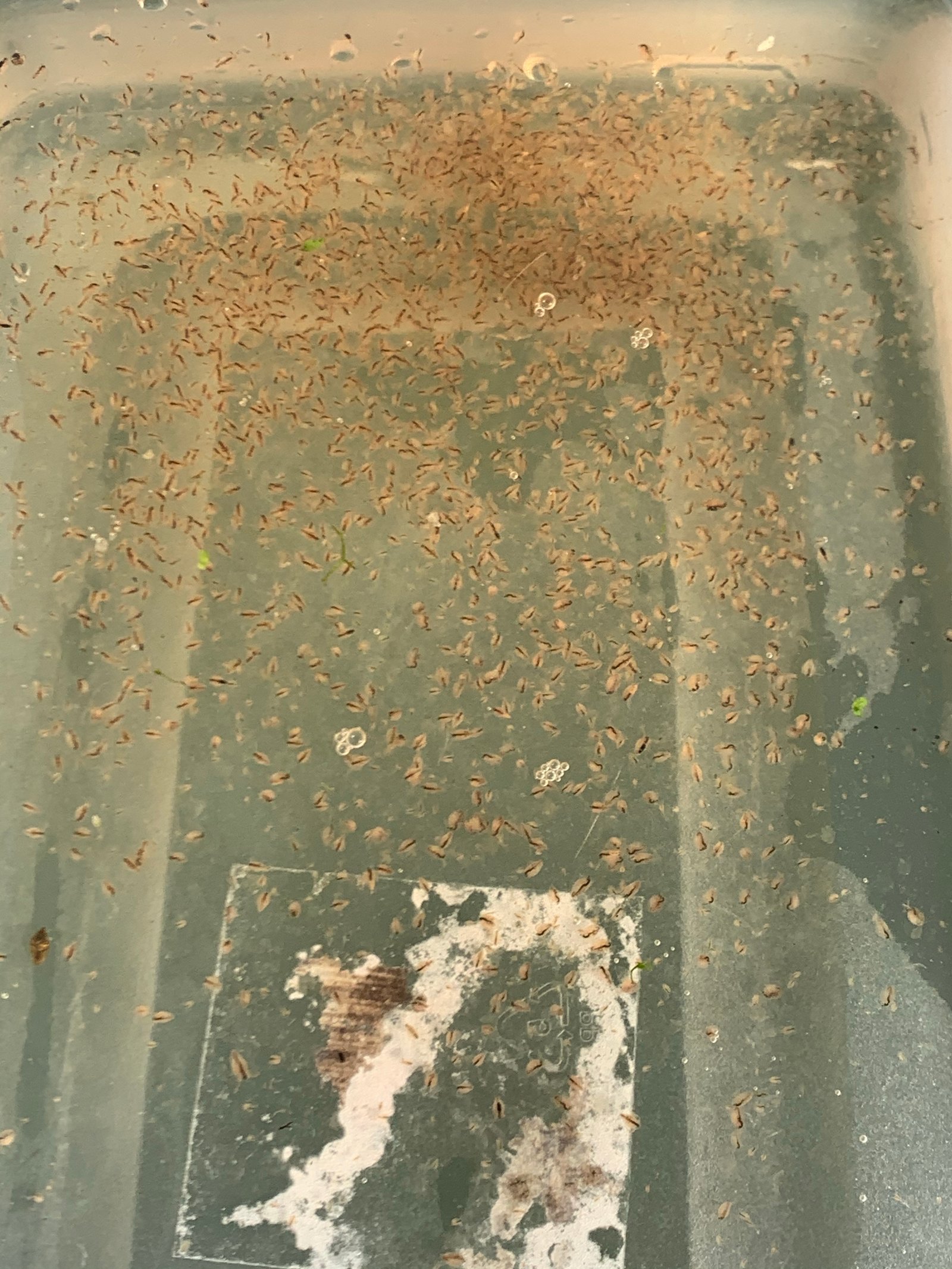
Daphnia culture in a jarDaphnia added to a fry tub. Adult daphnia are too large for the fry to eat but give birth to baby daphniaDaphnia cultured in outdoor tubs
Raising Daphnia Daphnia are planktonic filter feeders and can eat a variety of foods suspended in the water column. Murky water contains algae, infusoria, and bacteria and is slowly “filtered” by the daphnia. Different species of daphnia range in size from roughly 3mm-5mm to slightly larger than baby brine shrimp. Productive cultures will contain a range of sizes with adults and smaller juveniles mixed together.
A container as small as a 5-gallon bucket can maintain a small daphnia culture. Larger containers such as 10 gallon aquariums or plastic tubs will produce more daphnia and have more stable water conditions. Your container should be ready with aged aquarium water or green water before you add your starter culture. Green water can be easily made by leaving a container of aquarium water out in the sun for a week. Starter cultures can be acquired from other hobbyists, local fish clubs, and even online. Starting a daphnia culture with dechlorinated tap water isn’t ideal but with luck the daphnia will acclimate and reproduce. As daphnia filter-feed, they will turn green water clear and will need a small amount of supplemental food. Absent green water, daphnia will eat yeast, various types of flour, and powdered algae such as spirulina. An air bubbler keeps food suspended in the water column and replenishes oxygen consumed by the daphnia and by decaying matter.
In an ideal environment, the female daphnia reproduce parthenogenically, and each adult female gives birth to 10-20 live young about every week in room-temperature water. A productive culture can quickly become overcrowded, and it is important to harvest daphnia regularly to keep up production. As long as the water is occasionally changed and the daphnia are fed and harvested, you now have a limitless supply of food for your fish. Daphnia cultures will eventually crash for reasons such as overfeeding, overcrowding, environmental change, or for no obvious cause so it is best to maintain at least one backup.
Daphnia are not strong swimmers and it is important to not have strong water flow in your culture. An air bubbler is all that is needed to circulate the water for food suspension, oxygen exchange, and basic biological filtration. Mechanical filtration will remove food from the water column and even a sponge filter is not recommended. Plants such as pennywort or pothos can be used to remove nitrates and waste, but these plants may outcompete algae for nutrients. Turn off your power filters when feeding daphnia to your aquariums. Hang-on-back or cannister type filters will easily overpower and vacuum up free-swimming daphnia.
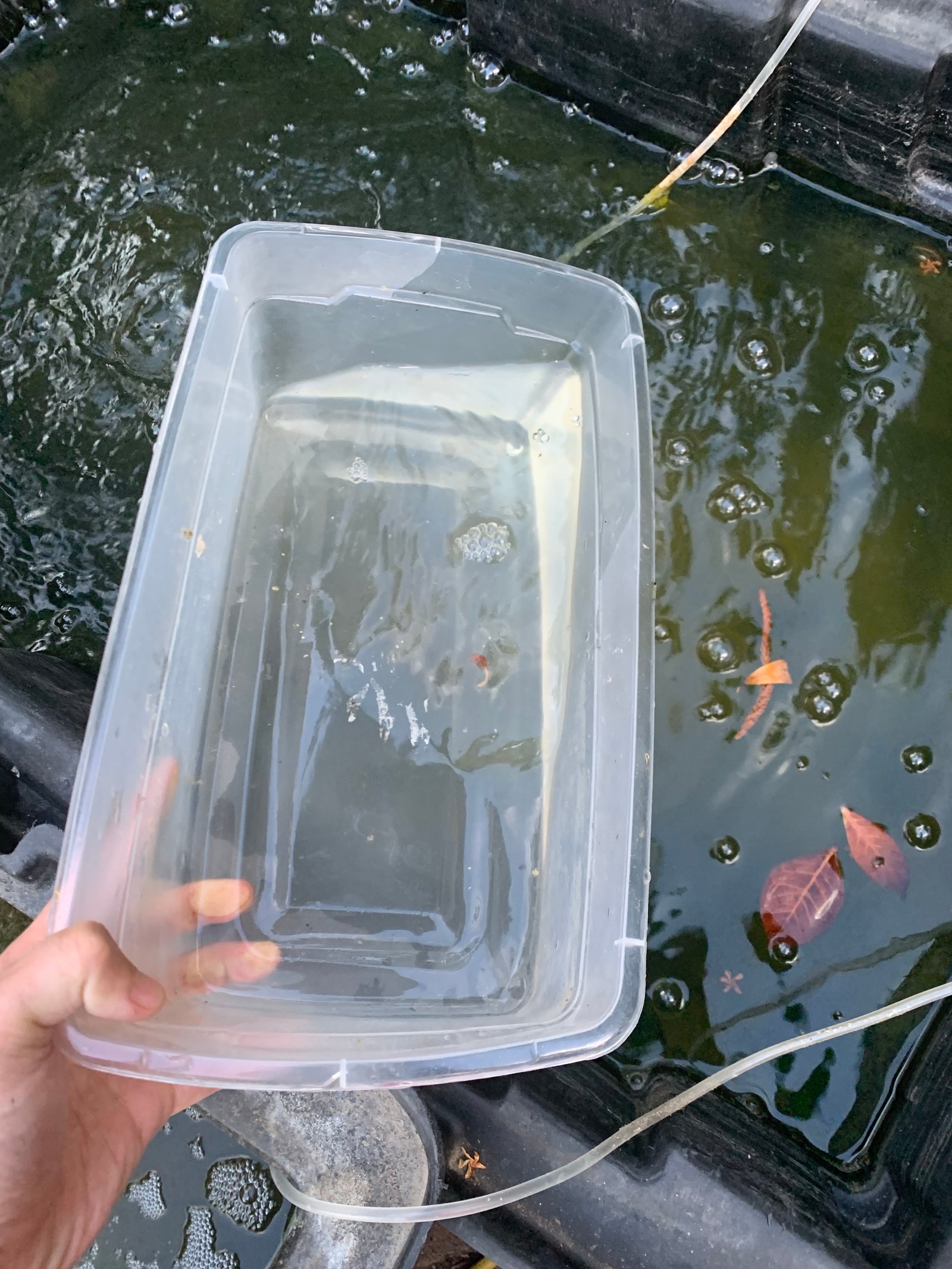
Harvesting Daphnia To harvest daphnia I use a shallow container such as a plastic shoebox filled with an inch of water and a fish net. Gently move the fishnet through culture in a figure-8 motion to capture daphnia. If the net moves too quickly it stirs up detritus from the bottom of the culture. Daphnia are attracted to light and shining a flashlight on a dark tank for several minutes concentrates the daphnia on one area. The captured daphnia can be put in the shoebox to feed to the aquariums by pouring or using a turkey baster.
Daphnia can be raised in indoor and outdoor cultures. I have done both and I will outline the benefits and drawbacks of each.
Indoor culture benefits – Convenient access to aquariums – Lack of pests such as dragonfly larvae – Room temperatures ensure good production during winter months – Harvest your daphnia from your fish room at any time.
Indoor culture drawbacks – Culture is unsightly with “dirty looking” water – More electricity needed to provide lighting for green water – Size of culture is limited – If mosquitos or midges lay eggs in the water the you will get lots of bugs in your home
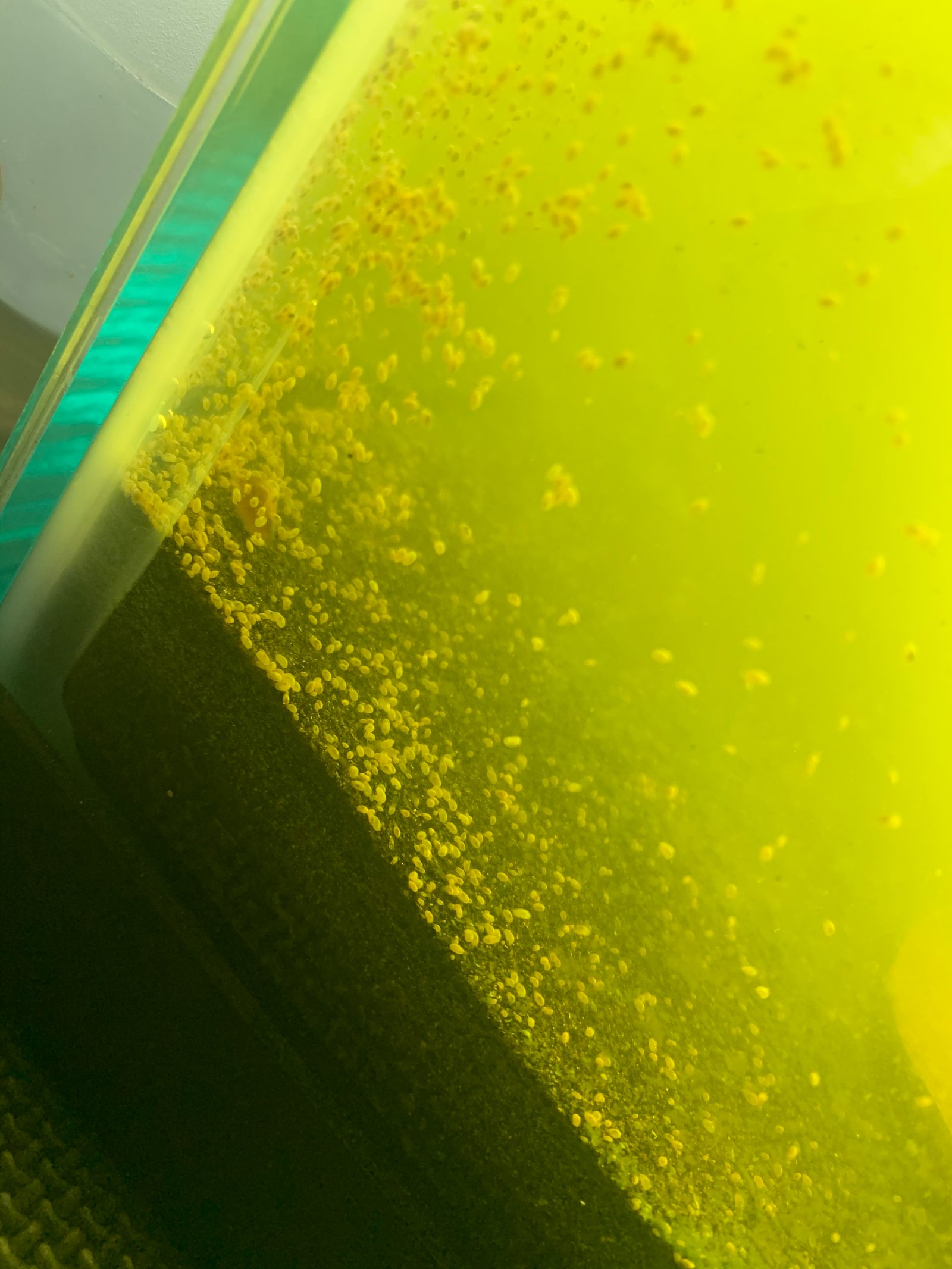
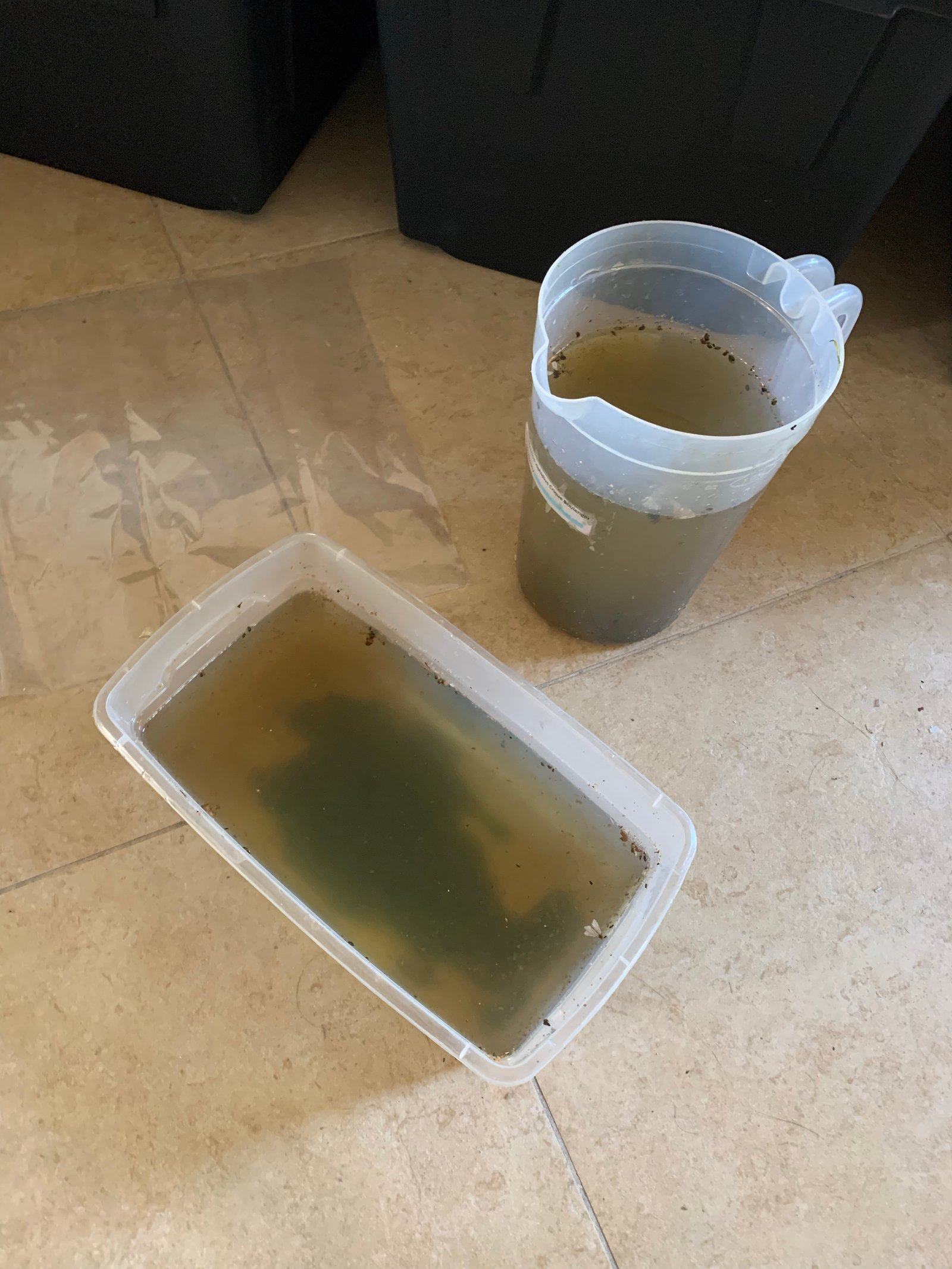
An indoor daphnia culture with “green water”“Dirty water” from a daphnia culture. This water is full of daphnia and infusoria and makes a great food for adult fish and fry
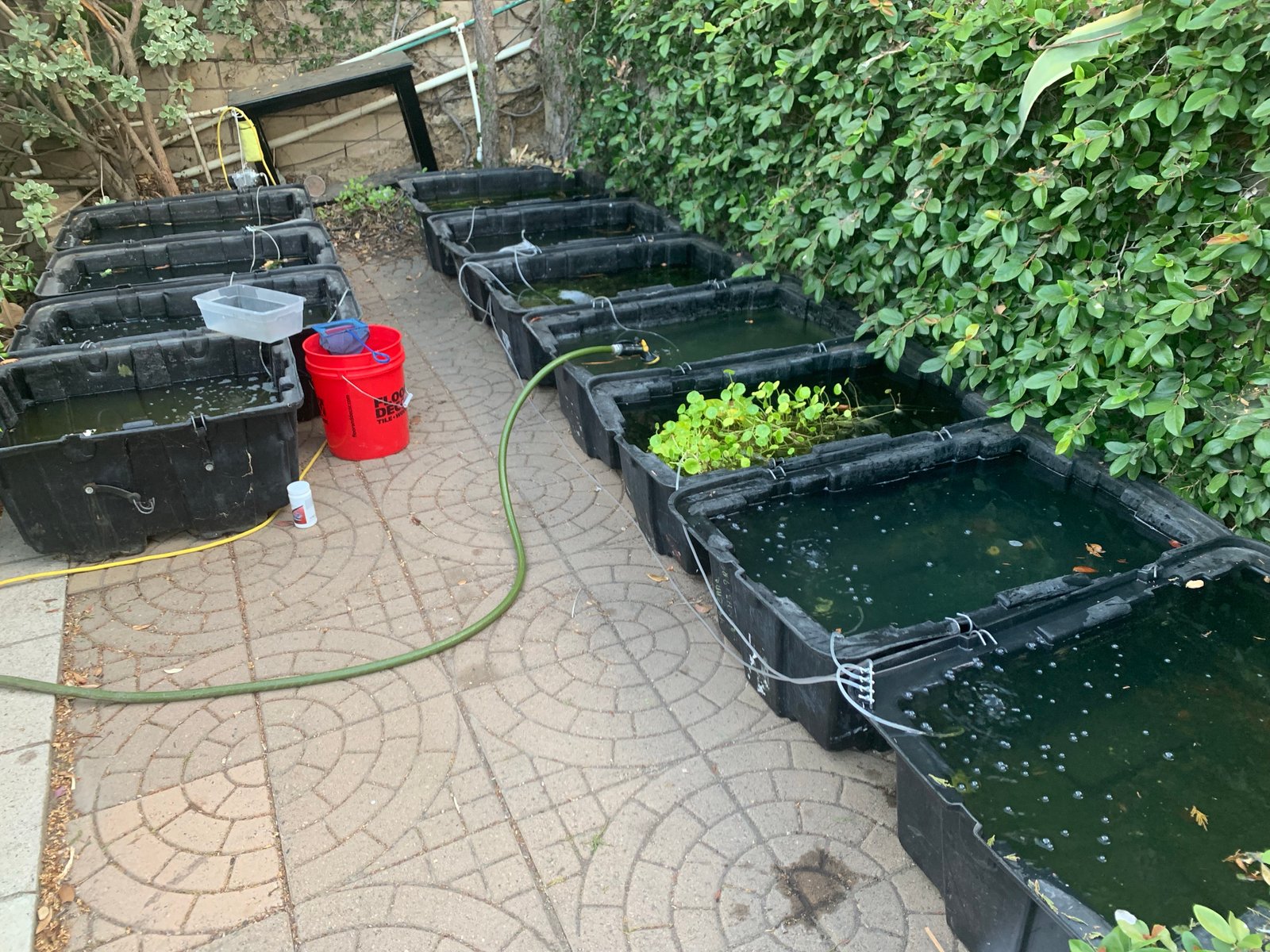
Outdoor culture benefits – Space to run larger “operation” and produce more daphnia than is practical indoor – Natural sunlight provides green water – Noisy air pumps unsightly tubs are less of a problem outdoors – Larvae from insects are additional protein
Outdoor culture drawbacks – Pests such as water beetles and dragonfly larvae can enter the culture. These will eat daphnia and can harm small fish. – Potential to culture unwanted hair algae in sunlight. – Daphnia slow down in the colder months and production is low when the water is under 60 Fahrenheit. – Outdoor daphnia is further from the fishroom and are inconvenient to harvest at night. – Culture can be contaminated by air pollution, especially during wildfire season
My outdoor daphnia cultures, grown in 50-gallon tubs with an air bubbler in each tub
Daphnia and moina are a great live food for killifish and other tropical fish. Their jerky movement through water is appealing to picky eaters, they stay in the water column until eaten, and can be used as “vacation feeders” without fouling the water.
Daphnia culture in a jarDaphnia added to a fry tub. Adult daphnia are too large for the fry to eat but give birth to baby daphniaDaphnia cultured in outdoor tubs
Raising Daphnia Daphnia are planktonic filter feeders and can eat a variety of foods suspended in the water column. Murky water contains algae, infusoria, and bacteria and is slowly “filtered” by the daphnia. Different species of daphnia range in size from roughly 3mm-5mm to slightly larger than baby brine shrimp. Productive cultures will contain a range of sizes with adults and smaller juveniles mixed together.
A container as small as a 5-gallon bucket can maintain a small daphnia culture. Larger containers such as 10 gallon aquariums or plastic tubs will produce more daphnia and have more stable water conditions. Your container should be ready with aged aquarium water or green water before you add your starter culture. Green water can be easily made by leaving a container of aquarium water out in the sun for a week. Starter cultures can be acquired from other hobbyists, local fish clubs, and even online. Starting a daphnia culture with dechlorinated tap water isn’t ideal but with luck the daphnia will acclimate and reproduce. As daphnia filter-feed, they will turn green water clear and will need a small amount of supplemental food. Absent green water, daphnia will eat yeast, various types of flour, and powdered algae such as spirulina. An air bubbler keeps food suspended in the water column and replenishes oxygen consumed by the daphnia and by decaying matter.
In an ideal environment, the female daphnia reproduce parthenogenically, and each adult female gives birth to 10-20 live young about every week in room-temperature water. A productive culture can quickly become overcrowded, and it is important to harvest daphnia regularly to keep up production. As long as the water is occasionally changed and the daphnia are fed and harvested, you now have a limitless supply of food for your fish. Daphnia cultures will eventually crash for reasons such as overfeeding, overcrowding, environmental change, or for no obvious cause so it is best to maintain at least one backup.
Daphnia are not strong swimmers and it is important to not have strong water flow in your culture. An air bubbler is all that is needed to circulate the water for food suspension, oxygen exchange, and basic biological filtration. Mechanical filtration will remove food from the water column and even a sponge filter is not recommended. Plants such as pennywort or pothos can be used to remove nitrates and waste, but these plants may outcompete algae for nutrients. Turn off your power filters when feeding daphnia to your aquariums. Hang-on-back or cannister type filters will easily overpower and vacuum up free-swimming daphnia.
Harvesting Daphnia To harvest daphnia I use a shallow container such as a plastic shoebox filled with an inch of water and a fish net. Gently move the fishnet through culture in a figure-8 motion to capture daphnia. If the net moves too quickly it stirs up detritus from the bottom of the culture. Daphnia are attracted to light and shining a flashlight on a dark tank for several minutes concentrates the daphnia on one area. The captured daphnia can be put in the shoebox to feed to the aquariums by pouring or using a turkey baster.
Daphnia can be raised in indoor and outdoor cultures. I have done both and I will outline the benefits and drawbacks of each.
Indoor culture benefits – Convenient access to aquariums – Lack of pests such as dragonfly larvae – Room temperatures ensure good production during winter months – Harvest your daphnia from your fish room at any time.
Indoor culture drawbacks – Culture is unsightly with “dirty looking” water – More electricity needed to provide lighting for green water – Size of culture is limited – If mosquitos or midges lay eggs in the water the you will get lots of bugs in your home
An indoor daphnia culture with “green water”“Dirty water” from a daphnia culture. This water is full of daphnia and infusoria and makes a great food for adult fish and fry
Outdoor culture benefits – Space to run larger “operation” and produce more daphnia than is practical indoor – Natural sunlight provides green water – Noisy air pumps unsightly tubs are less of a problem outdoors – Larvae from insects are additional protein
Outdoor culture drawbacks – Pests such as water beetles and dragonfly larvae can enter the culture. These will eat daphnia and can harm small fish. – Potential to culture unwanted hair algae in sunlight. – Daphnia slow down in the colder months and production is low when the water is under 60 Fahrenheit. – Outdoor daphnia is further from the fishroom and are inconvenient to harvest at night. – Culture can be contaminated by air pollution, especially during wildfire season
My outdoor daphnia cultures, grown in 50-gallon tubs with an air bubbler in each tub